Reading list
Every book here comes with its reservation.
A recommendation you cannot argue with is not worth much, so each entry says what the book is, who it suits, and where it falls down. The last section names the single best-selling book on the subject and tells you not to start there, which is the part that makes the rest worth reading.
Start here
If you buy one book, buy the first of these. If you buy two, add the second.

Egyptian Mythology: A Guide to the Gods, Goddesses, and Traditions of Ancient Egypt
Geraldine Pinch
$12.45
A scholarly handbook that works as a reference and reads as a book. The first half is thematic essays on the major myths and the second is an A to Z of deities, objects and concepts.
Who it suits
The best single starting point for anyone who wants the actual state of scholarship rather than a retelling. Not a picture book.
The reservation
The A to Z format means the arguments are compressed, and a reader wanting the case for a particular position has to go to the works it cites.

The Complete Gods and Goddesses of Ancient Egypt
Richard H. Wilkinson
$21.19
An illustrated survey of essentially every attested Egyptian deity, with iconography, cult centres, and the history of each cult, organised so you can identify a figure from what it is wearing.
Who it suits
The book to have open beside a museum catalogue or a photograph of a wall. Genuinely useful for identification, which most books on the subject are not.
The reservation
Reference rather than argument. It will tell you what a god looked like and where it was worshipped, and it will not tell you what to make of any of it.

The Oxford History of Ancient Egypt
Ian Shaw, editor
$21.12
The standard one-volume history, written period by period by specialists in each, with the chronology this site and most others use.
Who it suits
Anyone who has realised that the religion cannot be understood without knowing which century and which dynasty they are in.
The reservation
A multi-author survey reads like one: chapters vary in tone and in how much they assume. It is a reference to work through rather than a narrative to read.
The texts themselves
Reading the primary material in a modern scholarly translation is a completely different experience from reading about it, and it is cheaper than most people expect.

The Ancient Egyptian Book of the Dead
Raymond O. Faulkner, translator
$13.00
The standard modern English translation, published with the British Museum, usually printed alongside colour plates of the Papyrus of Ani.
Who it suits
Anyone who wants to read Spell 125 and the weighing of the heart in the words the Egyptians used rather than in a summary of them.
The reservation
It is a collection of spells and it reads like one: repetitive, allusive and full of names of beings nobody has heard of. That is what the text is, not a failure of the translation.
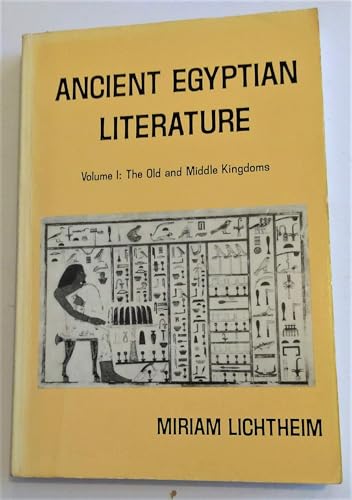
Ancient Egyptian Literature
Miriam Lichtheim
$49.95
Three volumes covering the Old and Middle Kingdoms, the New Kingdom, and the Late Period: hymns, instructions, tales, autobiographies and royal inscriptions, in clear translations with short introductions.
Who it suits
The single best way to hear Egyptians in their own voice rather than being told about them. The autobiographies in particular are startling.
The reservation
Sold as separate volumes, so check which one you are buying. The translations are decades old now and some readings have moved on, though the selection remains the standard one.
The Ancient Egyptian Pyramid Texts
Raymond O. Faulkner, translator
The oldest substantial religious writing to survive from anywhere on earth, in full, in English.
Who it suits
Anyone who wants to see what Egyptian religion looked like before Osiris was available to everyone and before there was a Book of the Dead.
The reservation
Difficult, fragmentary and written for a dead king rather than for a reader. Expect to work, and expect passages that make no sense without a commentary.
How the religion worked
The step from knowing who the gods were to understanding what Egyptians thought they were doing. This is where the subject becomes genuinely interesting.

The Search for God in Ancient Egypt
Jan Assmann
$33.95
An argument about what Egyptian religion actually was: how the state cult, the local cult and personal piety related, and how the relationship between an Egyptian and a god changed over three thousand years.
Who it suits
The book for the reader who has learned the gods and wants to know what people thought they were doing when they prayed to one.
The reservation
Translated from German and demanding. Assmann argues positions that other Egyptologists dispute, particularly on the Amarna period and on what he calls the Mosaic distinction.

Conceptions of God in Ancient Egypt: The One and the Many
Erik Hornung
$35.95
The book that reframed the whole question of whether Egyptian religion was polytheistic or monotheistic, by arguing that Egyptian logic simply did not require a thing to be either one or the other.
Who it suits
Anyone who has noticed that the sources contradict each other constantly and wants to know why nobody in Egypt seems to have minded.
The reservation
A dense academic monograph from 1971, and it assumes you already know the material. Worth the effort, and not a first book.

The Ancient Egyptian Books of the Afterlife
Erik Hornung
$29.34
A guide to the Amduat, the Book of Gates, the Book of Caverns and the rest: what each one contains, how they differ, and how the sun's night journey is mapped in each.
Who it suits
The reader who has looked at a Valley of the Kings wall and wanted to know what is actually being depicted hour by hour.
The reservation
Technical, and it works best with images to hand, which it does not supply many of.

Reading Egyptian Art: A Hieroglyphic Guide to Ancient Egyptian Painting and Sculpture
Richard H. Wilkinson
$33.89
A sign-by-sign guide to the symbols embedded in Egyptian art: the gestures, the postures, the objects held, and what each one is saying.
Who it suits
Exactly the reader who has worked out that Egyptian art is written rather than decorated and wants to start reading it.
The reservation
Organised by sign, so it is a lookup rather than a course, and it assumes you can already tell one god from another.
Learning the script
It is more learnable than it looks. Middle Egyptian is a normal ancient language with a normal grammar, and the signs are the easy part.

How to Read Egyptian Hieroglyphs: A Step-by-Step Guide to Teach Yourself
Mark Collier and Bill Manley
$23.16
A genuine teach-yourself course built around real monuments in the British Museum, taking you from nothing to reading an offering formula and a stela.
Who it suits
Anyone who wants to actually read a wall. It is the friendliest serious introduction there is, and it works without a teacher.
The reservation
It teaches you to read monumental formulae, which is a real and limited skill. Literary texts need a proper grammar afterwards.
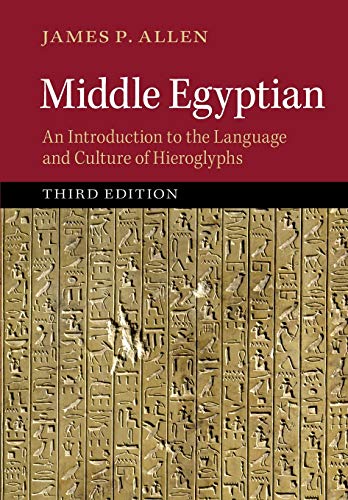
Middle Egyptian: An Introduction to the Language and Culture of Hieroglyphs
James P. Allen
$41.54
The standard modern university textbook: a full grammar with exercises, and cultural essays between the chapters.
Who it suits
The next step after Collier and Manley, and the book most degree courses use.
The reservation
It is a textbook and it expects to be worked through with exercises. Reading it passively will teach you very little.
Egyptian Grammar: Being an Introduction to the Study of Hieroglyphs
Alan H. Gardiner
The classic reference grammar, first published in 1927, and the source of the Gardiner sign list that every Egyptologist still uses to name signs.
Who it suits
Owned eventually by anyone serious, chiefly for the sign list at the back, which remains the standard.
The reservation
As a teaching grammar it has been superseded, and its analysis of the verbal system is no longer how the language is understood. Buy it for the sign list, learn the grammar elsewhere.
Read with care
Still in print, still selling, still a century behind. Named rather than ignored, because a reader who does not know this will buy one by accident.

The Egyptian Book of the Dead
E. A. Wallis Budge, translator
$12.07
The 1895 translation of the Papyrus of Ani, long out of copyright, and consequently the cheapest and most widely reprinted Egyptian text in the world.
Who it suits
Historians of Egyptology, and anyone who wants the interlinear hieroglyphic text at low cost.
The reservation
This is the one to be careful with. Budge's Egyptian was behind the state of the field even in his own lifetime and is a century behind it now, his translations are frequently wrong, and his commentary reads Egyptian religion through Victorian assumptions. Because it is free to reprint, it is what the algorithm surfaces and what most people end up buying. Read Faulkner instead, and treat quotations circulating online from this book with suspicion.
Some links here are Amazon affiliate links. If you buy through one we earn a commission at no extra cost to you, and it never changes what we recommend. Where a listing could not be matched cleanly the link opens a search rather than a guessed product page, because editions of these books differ by a century of scholarship and the wrong one is genuinely misleading. Prices were read when this page was built and will have moved.